Daily-use consumables
Coffee, hydration, snacks, frozen meals, electrolytes, and pantry staples used across rotating crews and shifts.
Incident log // station life
Practical brand pilots built around real station routines—meals, training, wellness, operations, and outreach. Respect the mission. Earn the seat.
Channel snapshot
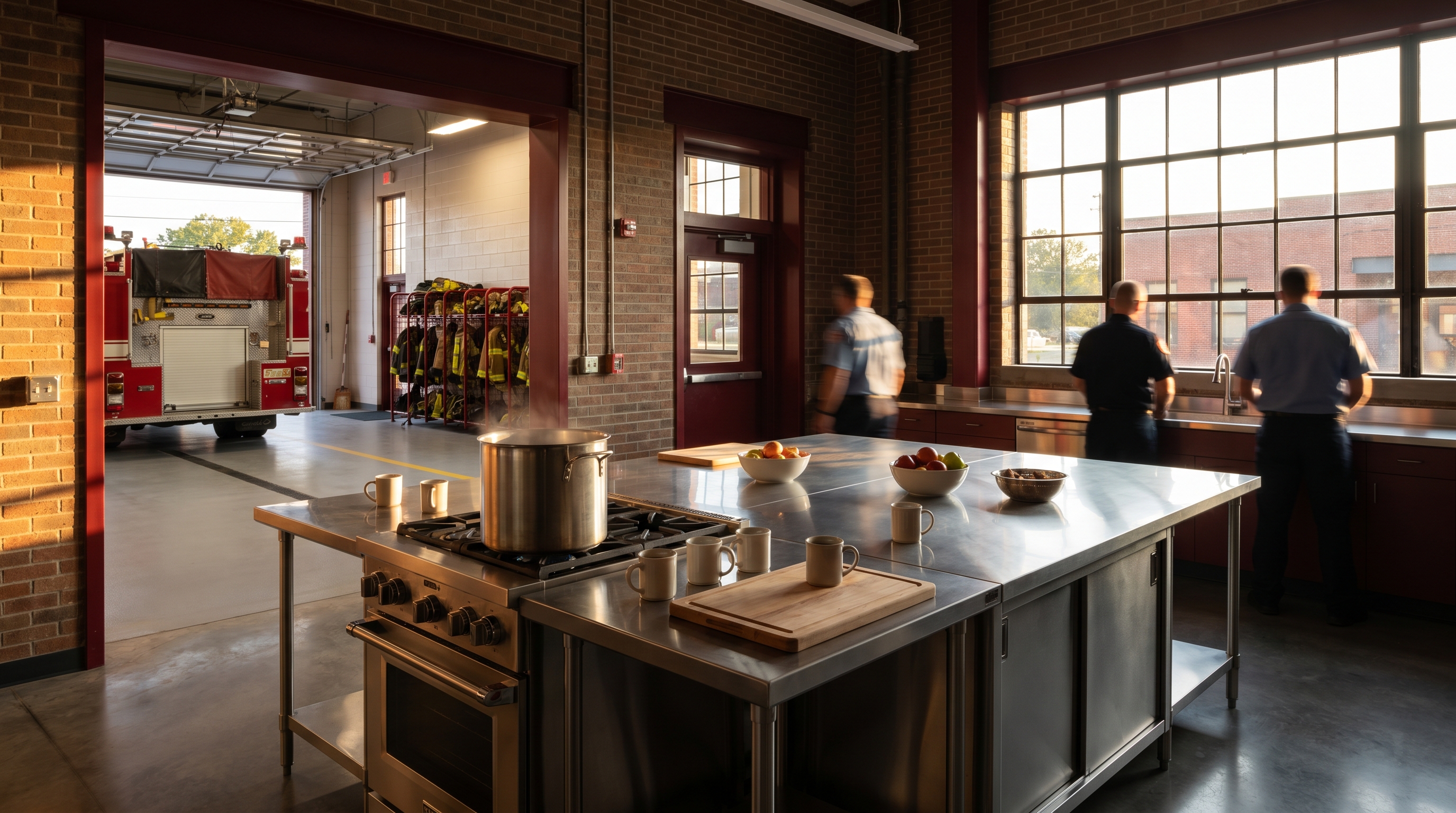
The station kitchen is a focus group.Trusted neighborhood hubs · daily-use product surface
What runs through the station
Firehouses concentrate the most repeated daily routines in a community: meals, training, recovery, and outreach. Brand fit shows up in three product territories.
Coffee, hydration, snacks, frozen meals, electrolytes, and pantry staples used across rotating crews and shifts.
Sleep aids, mobility, recovery nutrition, mental-health programs, and physical-readiness support for high-stress crews.
Cleaning, disinfection, station laundry, kitchen workflow, and other daily-use products with practical buying logic.
Brand opportunities
A firehouse isn't a billboard. It's a calendar of crew rotations, training, community programs, and station life — and each is a distinct activation surface for the right brand.
Multi-shift sampling that accounts for 24/48/96 schedules — products tested across actual rotation, not single trial days.
Communal-cook formats favor multi-serving, batch-friendly, and shelf-stable SKUs — a real product-fit lens.
Open-house events, school visits, and neighborhood programs are existing platforms for cause-aligned brand activation.
Stations partner with peer-support, fitness, and recovery programs — a credibility channel for adjacent wellness brands.
Each station operates as a near-autonomous purchasing unit, producing localized data on what actually re-orders.
FireHouses.net connects to Sheriff Substations, Police Substations, and FirstResponder.day — adjacent first-responder formats in the wider network.
Format breakdown
Brand fit varies meaningfully across career, combination, volunteer, and specialty stations.
Format 01
Full-time staffed stations operating 24/48/96 schedules with consistent crew rotation and active station kitchens.
Format 02
Mixed career and volunteer departments. Wider community programming and frequent neighborhood touchpoints.
Format 03
Volunteer departments anchoring small-town life. Strong community-events and outreach surface area.
Format 04
EMS-anchored, hazmat, urban search-and-rescue, and training academies with high-performance daily-use needs.
Activation process
Five practical checks keep a pilot grounded in the realities of station life.
Decide whether your activation fits a 24/48 rotation, weekly volunteer rhythm, or training-academy cadence before pitching crews.
Lead with multi-serving, batch-friendly, and station-kitchen-ready formats. The brief reads like a workflow, not a sell sheet.
Stage a 90-day pilot across 8–12 stations in one metro with sampling cadence, re-order tracking, and crew feedback.
Anchor activation to existing open-house, school-visit, and community-outreach calendars — never on top of an emergency-response posture.
Crew-level repeat purchase and community engagement become the deck for first-responder, public-sector, and institutional buyers.
Sister first-responder hubs
FireHouses.net is built as a sister to a wider first-responder network. These adjacent hubs cover the connected formats that round out brand reach across the channel.
Sister network of sheriff substations as community-and-supply hubs across rural and suburban jurisdictions.
Visit external siteSister sitePoliceSubstations.comSister network of municipal police substations across formats, with neighborhood-program surface area.
Visit external siteSister siteFirstResponder.dayCross-format first-responder calendar and recognition platform — adjacent activation moments for emerging brands.
Visit external siteStart with fit
Bring the product, the audience, and the outcome. We’ll start with station rhythm and program fit.
Start a conversation